


Fiber Laser vs Plasma Cutting: Which Is Right for Your Industrial Project?
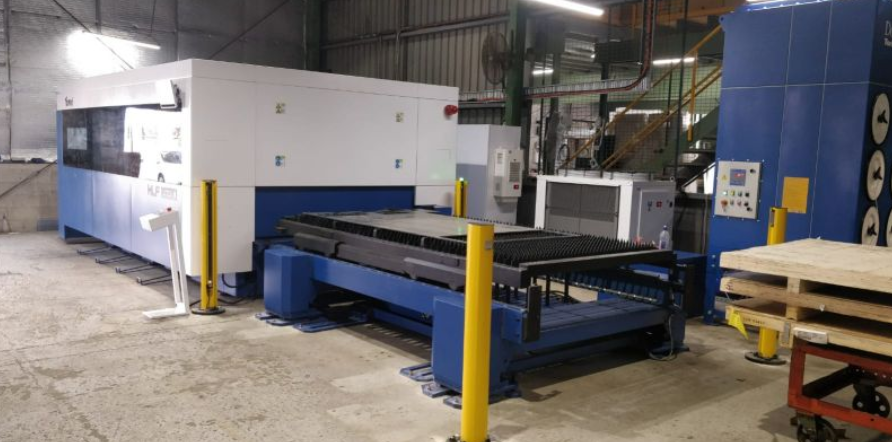
In Australia’s fast-paced and highly competitive fabrication and manufacturing industry, deciding between a plasma cutter and a fibre laser cutter goes well beyond simply evaluating technical specifications; it is a critical strategic choice that can impact productivity, efficiency, and long-term profitability.
Whether your operations focus on mining equipment, automotive components, agricultural machinery, or general metal fabrication, having a clear understanding of the strengths, limitations, and ideal applications of each cutting technology is essential. By carefully considering these factors, you can ensure your investment in cutting equipment delivers maximum performance, cost-effectiveness, and operational advantage for your business. You can scroll down to learn more, or browse our plasma cutters and fibre laser cutters here.
Plasma Cutters & Laser Cutters: How They Work and Where They Shine
- Fiber Laser Cutters: Fiber laser cutters employ a concentrated light beam delivered through an optical fiber to melt or vaporise material with precise accuracy. This CNC-controlled method is perfect for intricate designs and thin workpieces.
- Plasma Cutters: Conversely, plasma cutters use a stream of ionised gas (ie. plasma) to melt and remove metal, particularly conductive metals. It is renowned for its speed and durability when cutting through thick metal plates.
Fiber Laser vs Plasma Cutting: The Key Differences
| Factor | Fiber Laser Cutting | Plasma Cutting |
| Precision | Exceptional precision with a very fine kerf and the ability to maintain tight tolerances, making it ideal for detailed or intricate cuts. | Decent precision, but produces a wider kerf and a larger heat-affected zone (HAZ), which may require secondary finishing for fine work. |
| Speed (Thick Material) | Slower on thicker materials, as cutting speed decreases with increasing thickness, but excels on thin to medium sheets. | Fast cutting speed, particularly on metals thicker than 6 mm, allowing high throughput in heavy fabrication. |
| Cutting Thickness | Best suited for thin to medium materials, where accuracy and clean edges are more important than speed. | Ideal for medium to very thick metals, able to handle heavy-duty plates and structural steel efficiently. |
| Cost (Upfront & Maintenance) | Higher upfront investment and ongoing maintenance costs due to optics, power requirements, and precision components. | Lower initial cost and generally more cost-effective to maintain, with consumables like electrodes and nozzles being inexpensive and easy to replace. |
| Material Versatility | Can cut a wide range of metals as well as select non-metals, including plastics, acrylics, and composites. | Limited to conductive metals such as steel, aluminium, copper, and brass; cannot cut non-metal materials. |
| Heat-Affected Zone (HAZ) | Minimal HAZ, resulting in cleaner edges and less material distortion. | Larger HAZ, which may require additional post-cutting cleanup or finishing. |
| Material Condition Tolerance | Requires clean, smooth surfaces for optimal cutting quality; debris or rust can reduce performance. | Can cut through rust, paint, or coated surfaces without significant impact on cutting efficiency. |
| Safety & Operation | Typically requires an enclosed setup, safety protocols, and operator training due to high-powered lasers. | Easier to operate in general workshop environments, with simpler safety measures compared to laser systems. |
Material Compatibility
Choosing the right cutting technology depends not only on the type of material you work with but also on how the system fits into your production workflow. Both fiber laser and plasma cutting have distinct strengths that make them better suited to specific applications and operational needs.
Fiber Laser Cutting Can Handle:
- Metals: Works efficiently with a wide range of metals, including mild steel, stainless steel, aluminium, copper, brass, and titanium, providing precision cuts across different thicknesses.
- Non-Metals (with CO2 Lasers): Can also cut or engrave materials such as acrylic, wood, plastics, textiles, and ceramics, making fiber lasers highly versatile for mixed-material projects.
Plasma Cutting Can Handle:
- Metals Only: Effective for cutting conductive metals including mild steel, stainless steel, aluminium, brass, and copper.
- Surface Condition: Can cut through painted, rusty, or coated surfaces without compromising speed, making it ideal for heavy-duty industrial applications.
Automation and Workflow Integration
- Fiber Laser Systems: Integrate seamlessly with CNC automation and digital design workflows, excelling in environments focused on prototyping, precision cutting, and intricate pattern work.
- Plasma Systems: Thrive in high-output, rugged industrial setups where speed and durability are priorities, and where large-scale production requires straightforward integration into existing fabrication lines.
Choosing What’s Right for You
Selecting the right cutting method is crucial to match your workshop’s material requirements, production goals, and precision needs. The choice between plasma and fiber laser cutting can significantly impact efficiency, quality, and long-term return on investment.
Go with Plasma Cutting if you:
- Regularly work with thick, heavy-duty steel and need a system that can handle demanding industrial materials without slowing down production.
- Require speed, durability, and toughness to maintain high output in harsh or high-volume fabrication environments.
- Operate in general fabrication, structural steel, or industrial workshops where robust performance and throughput are essential.
- Have a limited budget but still want a cutting solution that can scale with future production needs.
Go with Fiber Laser Cutting if you:
- Require extreme precision and the ability to cut intricate designs or fine details with consistent accuracy.
- Frequently work with thin sheet metals or mixed-material projects where versatility and fine control are important.
- Need clean, high-quality edge finishes that reduce or eliminate post-cutting cleanup and improve overall productivity.
- Operate in specialised sectors such as electronics, medical device manufacturing, aerospace, or creative industries where accuracy, quality, and material versatility are critical.
Make the Right Investment for Your Business
Both fiber laser and plasma cutting technologies play important roles in Australia’s industrial and manufacturing landscape. Choosing the right option ultimately depends on your workshop’s specific requirements, including the types and thicknesses of materials you work with, the level of cut precision and quality you need, your available budget and long-term cost of ownership, as well as the scale of production and degree of automation desired. Carefully considering these factors will help ensure your investment maximises efficiency, productivity, and returns for your business in the long term.
Need Help Selecting the Right Cutting System?
Over the years, Applied Machinery has supported countless Australian workshops to achieve their goals by providing them with high-quality machinery. Whether you’re looking to upgrade your current equipment or set up a new operation, our team of experts can guide you through every step, from selecting the right machine to ensuring safety and compliance, as well as handling installation and providing comprehensive training. You can explore our range of plasma cutters & fibre laser cutters here, or head over to our homepage to see our many other fine Industrial Machines. Should you have a question, or should you need direct assistance with something, you can get in touch with our trusty crew of experts via the Applied Machinery contact page.
