Manual Lathes for Australian Workshops: From Basic Components to High-Precision Models
Introduction
A manual lathe is a type of machine tool designed to remove material from a rotating workpiece by means of cutting tools that are operated entirely by hand. The operator manually controls the movement of the cutting tool along various axes — typically longitudinal (along the length of the workpiece) and cross (toward or away from the center) — in order to shape the material into precise cylindrical, conical, or even custom geometries. Manual lathes typically require a high degree of skill and experience, as the quality of the final product depends largely on the operator’s ability to manage cutting speeds, tool angles, and feed rates.
Mual lathes remain an essential piece of equipment in machine shops, vocational training centres, and manufacturing facilities throughout Australia. They are widely appreciated for their reliability, mechanical simplicity, and tactile control, making them ideal for both training future machinists and handling low-volume or highly customized work. While CNC (Computer Numerical Control) machines dominate high-volume industrial production due to their speed and automation, manual lathes continue to serve a critical role in prototyping, maintenance tasks, and one-off fabrications. Their continued relevance in the metalworking industry highlights the importance of hands-on craftsmanship and foundational machining skills.
Manual Lathes Vs Automated Lathes: What’s the Difference?
| Feature | Manual Lathes | Automated (CNC) Lathes |
| Operation | Manual lathes are operated directly by the machinist using handwheels, dials, and levers to control tool movement. | CNC lathes are operated via a computer interface using pre-written G-code or software to execute programmed toolpaths. |
| Skill Requirement | Manual lathes require a high degree of manual dexterity, machining knowledge, and hands-on experience to achieve accuracy. | CNC lathes require proficiency in CNC programming and software; less manual intervention once the machine is running. |
| Flexibility | Well-suited for custom jobs, one-off components, and equipment repairs where adaptability is key. | Optimised for batch production of complex parts where consistency and automation are priorities. |
| Efficiency | Manual lathes tend to be slower due to manual adjustments; relies heavily on the operator for each task. | CNC lathes can offer fast, continuous production with minimal human oversight, enhancing throughput and reducing downtime. |
| Precision | Accuracy depends on operator skill, tool condition, and setup quality; slight variations may occur. | Delivers consistent, high-precision results with repeatability across multiple runs thanks to automation. |
| Applications | Commonly used in workshops for prototyping, toolroom tasks, student training, and custom fabrication. | Widely employed in large-scale manufacturing sectors such as aerospace, automotive, defence, and electronics. |
| Cost | Lower purchase price and simpler maintenance make it ideal for small workshops and educational use. | Higher initial cost but lower per-part cost over time due to scalability and reduced labour requirements. |
Key Components of a Manual Lathe
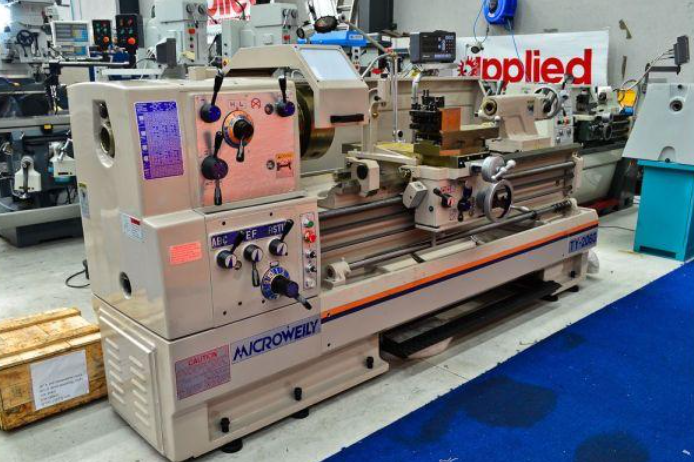
A manual lathe consists of several key components, including:
- Headstock: The headstock houses the main motor and the drive mechanism responsible for rotating the spindle. It typically includes gears or belt systems that allow the operator to adjust spindle speeds for different materials and cutting tasks. This component also provides the power and torque required to drive the workpiece during machining operations.
- Bed: The bed serves as the rigid foundation of the lathe, supporting all other major components such as the headstock, tailstock, and carriage. It is precision-ground to ensure alignment and accuracy during operation, which is critical for achieving consistent results. The bed often includes guideways (also called "ways") that guide the carriage and tailstock along a straight path.
- Carriage: The carriage holds and moves the cutting tool across the length of the bed, enabling material removal along the workpiece. It consists of several subcomponents including the saddle, cross slide, compound rest, and tool post for multi-directional control. Operators use handwheels on the carriage to make fine manual adjustments to the tool's position.
- Tailstock: Located opposite the headstock, the tailstock can be moved along the bed and locked into place as needed. It supports the end of the workpiece during turning, especially for long or slender items to prevent deflection or vibration. The tailstock can also be fitted with attachments like drill chucks, centers, or reamers for auxiliary operations.
- Chuck: The chuck is a clamp-like device mounted on the spindle that securely holds the workpiece in place while it rotates. Most manual lathes use a 3-jaw (self-centering) or 4-jaw (independent) chuck, depending on the job’s requirements. Proper chuck selection and tightening are crucial for maintaining safety and workpiece stability during machining.
Advantages of Manual Lathes
While CNC technology has transformed modern machining, manual lathes continue to hold a vital place in workshops and training environments for several key reasons:
Cost-Efficiency: Manual lathes are much more economical compared to automated CNC systems, making them a practical choice for small businesses, hobbyists, and educational institutions with limited budgets. Their lower initial cost allows new operators or start-ups to enter the field without significant financial barriers.
Hands-On Control: Unlike automated systems, manual lathes allow machinists to physically guide the cutting process. This hands-on approach provides immediate feedback through feel and sound, enabling precise adjustments during delicate, customised, or single-piece work.
Easier Maintenance: With minimal electronics and fewer complex systems, manual lathes are generally easier and less expensive to service. Their straightforward mechanical design means that many repairs can be done in-house without specialised diagnostic equipment.
Ideal for Training: Manual lathes are widely used in training environments to help students understand core machining principles such as tool positioning, feed rates, and material behaviour. Mastering manual techniques builds a strong foundation for more advanced CNC training.
How to Choose the Right Manual Lathe
When selecting a manual lathe for your workshop or facility, it’s important to consider several technical and practical aspects to ensure the machine suits your specific needs. Core considerations include material type, workholding and setup, tooling, maintenance requirements, and accuracy expectations. Below are some essential tips to guide your decision:
- Swing Over Bed: This specification indicates the maximum diameter of material that can be turned over the lathe bed. It directly affects the size and versatility of parts you can work on, with common swing sizes ranging from 300 mm for smaller jobs to over 1000 mm for industrial applications.
- Distance Between Centres: This measurement defines the maximum length of workpiece the lathe can accommodate between the headstock and tailstock. Selecting the appropriate distance ensures your machine can handle both current and future project sizes without limitation.
- Motor Power: The motor’s horsepower determines the machine’s ability to handle heavy cuts and dense materials. A higher-power motor not only improves efficiency but also reduces the risk of tool stalling or uneven finishes during demanding operations.
- Bed Type & Rigidity: A lathe with a one-piece, cast-iron bed provides superior stability and dampens vibration during machining. This rigidity is essential for achieving consistent precision, especially when turning longer or harder workpieces.
- Additional Features: Look for added capabilities like quick-change tool posts for faster setups, rear splash guards for a cleaner workspace, and integrated thread-cutting functions for expanded functionality. These features can significantly enhance productivity and user experience, especially in a busy or professional environment.
Microweily High Speed Precision Lathe Machine from Applied Machinery
At Applied Machinery, we provide high-quality manual lathes designed to meet Australian standards and suit a wide range of workshop needs. Our Microweily lathe machines are engineered for long-lasting performance, offering exceptional durability, reliability, and precision in every application. Backed by decades of engineering expertise and a commitment to continuous improvement, Microweily has earned a strong reputation as a global leader in manual lathe manufacturing. Their machines are trusted by machinists worldwide for both training and industrial use. Whether you're upgrading your facility or equipping a new workshop, Applied Machinery has the right lathe solution for you. Contact us today to discuss your requirements or request a quote.
Popular Manual Lathe Models From Applied Machinery
Microweily TY-1640S Centre Lathe – NEW
This high-performance centre lathe features a CE-approved electrical panel and control switches for enhanced safety and compliance. Equipped with a 9-inch self-centering 3-jaw chuck, it offers a 410 mm swing over bed, 240 mm swing over cross slide, and a generous 595 mm swing in gap diameter—ideal for precision turning on medium-sized workpieces.
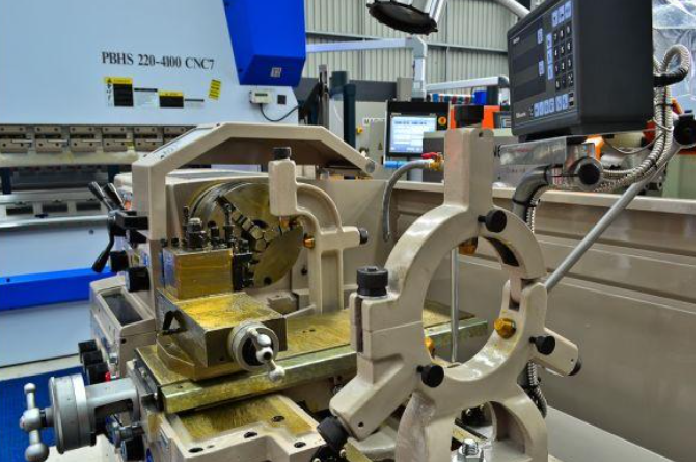
Microweily TY-26120 Centre Lathe – NEW
Designed for heavy-duty applications, this robust lathe offers a 660 mm swing over bed, 460 mm swing over cross slide, and a large 845 mm gap swing. It comes with a rear splash guard and lead screw protector as standard, providing added safety and convenience during operation.
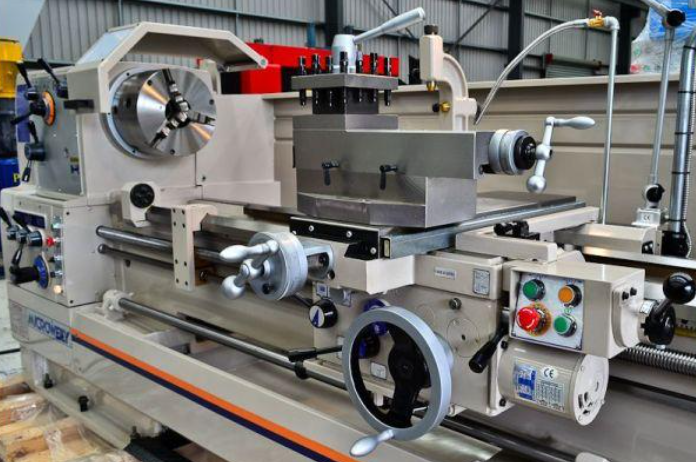
Microweily TY-2080 Centre Lathe
Built for power and precision, the TY-2080 features a 510 mm swing over bed, 330 mm swing over cross slide, and a 680 mm swing in gap diameter. It offers a 255 mm centre height, 2040 mm between centres, and is driven by a powerful 15 HP main motor. This model also includes a 2-axis Mitutoyo Digital Readout (DRO) for improved accuracy and user control.