


Prevent Common Sheet Metal Bending Mistakes with a Yawei Press Brake
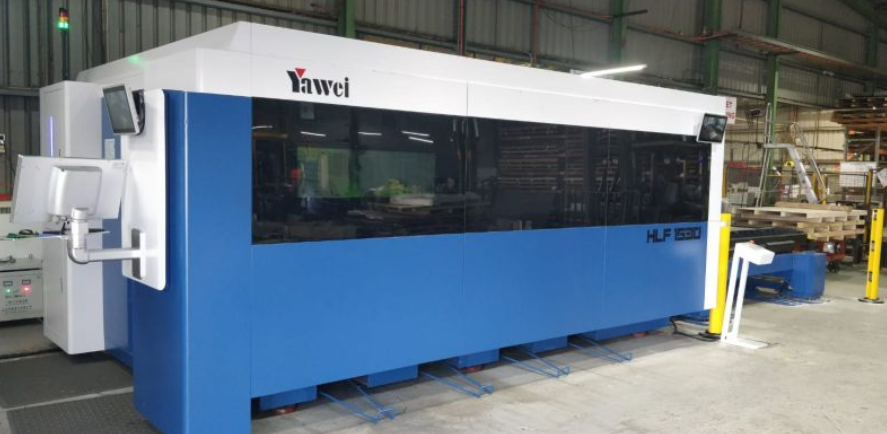
CNC pressbrakes are utterly indispensable across a wide range of industries. Bending sheet metal is one of the core forming operations in modern metal fabrication, and it’s one that demands accuracy, consistency, and process control. Whether producing simple brackets or complex, multi-axis components, even the most skilled of operators will encounter issues that result in dimensional inaccuracies, cosmetic defects, excessive scrap rates, and costly production delays. Small deviations in setup, tooling selection, or programming can quickly compound into large-scale inefficiencies.
That’s where advanced press brake systems from Yawei come in. By integrating CNC controls, automated compensation systems, intelligent backgauge positioning, and real-time feedback technologies, Yawei machines reduce human error and improve repeatability. The result is higher part quality, reduced rework, better material utilisation, and increased overall throughput. Outlined below are several of the most common sheet metal bending mistakes; and how modern Yawei press brake technology is designed to prevent them before they impact your bottom line.
Common Mistakes When Bending Sheet Metal & How Yawei Machines Prevent Them</h2>
Bending errors rarely stem from a single catastrophic issue. Rather, they often arise from small process oversights, such improper tooling, an incorrect setup, insufficient compensation for material behavior, or inconsistent operator technique. Over time, these issues translate into scrap, rework, tool wear, missed tolerances, and production bottlenecks. Modern CNC press brake systems from Yawei are engineered to reduce these risks through automation, programmable controls, and integrated safety systems.
Improper Material Positioning and Backgauge Alignment:
Accurate bending begins with correct material placement. If the sheet is not seated squarely against the backgauge fingers; or if the backgauge itself is improperly programmed, then bend lines will shift. Even minor misalignment can produce angle variation, inconsistent flange lengths, or parts that fail dimensional inspection.
Yawei’s Solution: Yawei CNC press brakes are equipped with programmable multi-axis backgauges (commonly X, R, Z1, Z2 configurations depending on model). These systems are servo-driven and controlled through CNC interfaces, allowing repeatable positioning with high accuracy. Automated backgauge movement reduces reliance on manual measurement and operator estimation, which significantly improves part-to-part consistency and reduces setup variability.
Incorrect Punch and Die Selection:
Tooling selection directly influences bend radius, angle accuracy, tonnage requirements, and surface finish. Using a die opening that is too narrow can cause excessive tonnage, part marking, or cracking; especially in harder materials. Conversely, an oversized die opening can result in uncontrolled bend radii or angle inaccuracies. Inappropriate punch geometry can also damage tooling or produce poor-quality bends.
Yawei’s Solution: Yawei press brakes are compatible with a wide range of standardised modular tooling systems. Their CNC controls allow operators to input material thickness, bend angle, and tooling parameters, helping calculate appropriate bend allowances and tonnage. While proper tooling selection still requires operator knowledge, the control system provides programmed guidance and repeatable settings, reducing the likelihood of mismatched tooling and minimizing scrap.
Failure to Account for Material Properties and Springback:
Different materials behave differently under load. Mild steel, stainless steel, aluminum alloys, and high-strength steels each exhibit unique yield strengths and elastic recovery characteristics. If springback is not accounted for, the final angle will open up after unloading, resulting in under-bent parts that fail tolerance requirements.
Yawei’s Solution: Yawei CNC systems allow operators to program material type, thickness, and bending parameters into the control interface. Many models support angle compensation and crowning systems (either mechanical or hydraulic) to counteract deflection along the beam. The CNC can automatically adjust ram depth and bending force to compensate for springback, helping achieve accurate target angles, even with higher-strength or work-hardening materials.
Overlooking Safety Protocols and Operational Safeguards: </h3>
Bypassing safety procedures not only creates risk for personnel but can also disrupt the bending process. Sudden interruptions, improper handling, or accidental contact can damage tooling, misalign setups, or halt production.
Yawei’s Solution: Yawei press brakes are equipped with modern safety features such as light curtain protection systems, emergency stop circuits, and user-friendly human-machine interfaces (HMI). These systems are designed to meet international safety standards commonly applied in press brake manufacturing. The intuitive interface simplifies parameter input and operation, reducing the likelihood of user error while maintaining safe working conditions.
Variability in Operator Technique:
In manual or less automated environments, operator skill level significantly affects outcome. Differences in sheet positioning, timing, or sequencing can produce inconsistent results, particularly across long production runs.
Yawei’s Solution: CNC automation standardizes the bending sequence. Once a program is developed and validated, the machine executes the same backgauge positioning, ram stroke, and bend sequence repeatedly. This reduces dependence on operator experience and ensures uniformity across shifts and personnel changes. The result is improved repeatability, tighter tolerances, and more predictable production output.
Neglecting Maintenance and Calibration:
Press brakes rely on mechanical alignment, accurate ram travel, and properly functioning hydraulic or servo systems. Worn tooling, lack of lubrication, or uncalibrated components can introduce angle variation, inconsistent tonnage delivery, and premature tool wear.
Yawei’s Solution: Yawei machines are designed with service accessibility and maintenance efficiency in mind. Many models include diagnostic systems within the CNC interface that help monitor machine status and alert operators to required checks. Proper calibration and routine maintenance preserve bending accuracy, extend tooling life, and reduce unplanned downtime, ultimately protecting capital investment.
Different Yawei Machines for Sheet Metal Bending
Yawei manufactures a range of press brake systems to suit varying production volumes, material thicknesses, and precision requirements. Each configuration addresses specific operational needs:
- Yawei Hydraulic Press Brakes
Hydraulic press brakes remain a widely used solution in fabrication shops due to their power and versatility. Yawei hydraulic models are suitable for medium to heavy-gauge bending applications. They deliver high tonnage capacity and are appropriate for general fabrication, structural components, and thicker materials. - Yawei Electric Servo Press Brakes
Electric servo press brakes operate using servo-driven ball screw or belt systems instead of traditional hydraulics. These machines are known for energy efficiency, reduced oil usage, lower maintenance requirements, and precise ram positioning. They are particularly effective for high-speed production environments and thinner materials where repeatability and energy savings are priorities. - Yawei CNC Press Brakes
CNC-configured machines offer full programmability, multi-step bending sequences, graphical interfaces, and automated backgauge movement. These systems are well suited for complex parts requiring multiple bends and tight tolerances. CNC capability ensures consistent execution across high-mix, medium-volume production. - Yawei Hybrid Press Brakes
Hybrid models combine hydraulic force generation with servo-controlled precision. This design balances power efficiency with accurate ram control and reduced energy consumption compared to conventional hydraulic systems. Hybrid press brakes are often selected for demanding applications that require both tonnage capacity and precision control.
Final Words
Errors in sheet metal bending can quickly eat through both time and profit margins. Modern press brake systems from Yawei are designed to minimise these risks by addressing the root causes of common bending faults. With integrated CNC controls, servo-driven backgauges, programmable tooling parameters, and built-in safety systems, Yawei machines provide Australian workshops with precision and dependability they need to thrive in a competitive market.
No matter how big or small your production is, a Yawei press brake machine can give your operation improved accuracy, enhanced operational efficiency, and reduced bending errors.
By integrating automation, programmable controls, and safety systems, modern press brake technology significantly lowers the risk of scrap, rework, and downtime in sheet metal forming operations.
Ready to Upgrade Your Workshop?
Strengthen your operation with enhanced accuracy, higher throughput, and dependable performance by choosing Sheetmetal machinery - Yawei press brakes available through Applied Machinery.
Explore the complete Yawei lineup, including the PBA, PBC, PBE, and PBH series, to identify a press brake solution aligned with your production requirements, material range, and long-term growth objectives. For all inquiries, don’t hesitate to get in touch with us directly.
