


Sheet Metal Deburring: Wet & Dry Processes Explained
Introduction
When it comes to the manufacturing industry, precision is king. Indeed, even the tiniest vestigial imperfection — be it a rough edge or an infinitesimal burr — can drastically reduce the aesthetics, safety, and overall quality of your final product. That’s where deburrers come in. With a wide range that caters to small operation as well as larger fabrication factories, these essential machines are built to enhance the standards of your metal work, while simultaneously improving upon operator safety.
Applied Machinery offers a wide range of deburrers, from trusted brands such as Jonsen and Weber. Renowned for their high performance output and exceptional durability, our deburring machines are as reliable as they are affordable. Offering smooth operability and an even smoother finish, a quality deburrer is a wise investment for any manufacturing business that’s looking to boost their safety standards, their productivity, and quality. You can browse deburrers here or scroll down to learn more.
So what exactly is Deburring?
In a nutshell, deburring is is the process of removing burrs, ie. those sharp edges or rough areas that occur on metal parts in the aftermath of cutting, machining, or general fabrication. Common causes of burrs include laser cutting, waterjet cutting, milling & drilling, and punching & stamping.
Burrs are not only suboptimal on an aesthetic and tactile level, but they can also prove to be safety risks, as they can affect the fit or function of components in mechanical assemblies.
To remedy this, sheet metal deburring machines have been specifically designed to smooth and clean the edges of metal sheets after cutting or shearing processes. Deburring machines automate the removal of sharp or uneven edges, enhancing both the safety and appearance of the finished part.
How Does the Deburring Process Work?
There are two primary deburring processes: manual, and automatic. Each is suited to specific production needs that are based on size and volume.
Manual Deburring:
Manual deburring involves using hand tools such as files, scrapers, or rotary tools to remove burrs from metal parts. It is best suited for small, intricate, or low-volume components where precision and control are required. While it offers flexibility for complex shapes, manual deburring is slower and more labor-intensive compared to automated methods.
- Manual deburring is best suited for small, delicate parts or low-volume production.
- Manual deburring involves the use of hand tools such as files or rotating deburring tools.
- Manual deburring provides greater control but is time-consuming and requires significant manual effort.
Automated Deburring:
Automated deburring machines are designed to gently remove burrs without affecting the geometry or surface finish of the part. Rather than polishing or removing surface scratches, the primary function of an automated deburring machine is to eliminate excess material and smooth sharp edges.
- Automated deburring machines are ideal for processing high volumes or larger-sized parts.
- Automated deburring machines use abrasive belts, brushes, or media blasting to remove burrs efficiently.
- Automated deburring machines typically include conveyor-fed systems that allow for faster throughput and consistent results.
Wet Vs. Dry Deburring: Which is Best for You?
Deburring processes are generally classified into two categories: wet and dry. Each comes with its own pros and cons which are ultimately informed by the required application.
Dry Deburring
Dry deburring machines use abrasive tools such as belts, discs, or brushes without the aid of liquids. These systems are effective for small to medium-sized parts where moisture is undesirable. Their cleaner operation makes them a popular choice in many workshops.
Dry Deburring Pros:
- It is an friendly process, as it requires no liquids or lubricants.
- It comes with lower waste disposal requirements.
- It’s grenvironmentally eat for standard edge rounding and burr removal.
Dry Deburring Cons:
- It comes with a higher fire risk, due to heat and metal dust buildup.
- It can produce hazardous airborne particles.
- Its limited cooling may lead to heat distortion, especially on thin or delicate parts.
Wet Deburring
Wet deburring machines use water combined with abrasive media to process part edges. The addition of water reduces airborne dust, provides lubrication, and helps manage heat buildup, making these systems ideal for heat-sensitive materials.
Wet Deburring Pros:
- It effectively controls heat, thereby preventing part distortion.
- It enhances operator safety by reducing fire hazards and airborne particles.
- It produces a more uniform and visually appealing finish.
- It extends the life of abrasives through lubrication.
- It increases efficiency by allowing faster processing with fewer passes.
- Some coolants offer corrosion protection for metal parts.
Wet Deburring Cons:
- It comes with a higher upfront equipment cost.
- It requires proper management of coolant waste and sludge.
- It needs regular filtration and maintenance of the coolant system
The Advantages of a Sheet Metal Deburring Machine
Sheet Metal Deburring Machines offer a slew of benefits, most notably:
- Improved Safety: Removing sharp edges helps create a safer work environment by reducing the risk of cuts and injuries.
- Enhanced Quality: A smooth, rounded finish not only improves the product's appearance but also minimizes the chance of corrosion, as sharp edges are more prone to rust.
- Increased Efficiency: Automated deburring significantly speeds up the process, enabling faster production compared to manual techniques.
- Consistent Results: Automation ensures a uniform finish across all parts, helping maintain consistent quality standards.
- Versatility: Deburring machines are often capable of processing a wide range of materials and thicknesses, making them suitable for diverse applications.
Tips for Choosing the Right Deburring Solution For You
When choosing a deburring machine, it's important to consider vital factors such as:
- The Material Type That You’re Processing: Different materials, such as stainless steel, aluminum, or powder metals, require specific deburring techniques and equipment to avoid damage and ensure effective burr removal.
- The Size & Volume of Parts: The machine should alway accommodate the dimensions of your parts and handle your production volume efficiently, whether you’re processing small batches or high-volume runs.
- The Desired Surface Finish Quality: Depending on whether you need a rough edge cleanup or a smooth, polished finish, you’ll need a machine capable of meeting those surface quality requirements.
- Your Safety Requirements & Waste Management Capabilities: Always consider equipment that complies with workplace safety standards and matches your capacity to manage dust, debris, and waste products responsibly.
Investing in a reliable, high-quality deburring machine will help you maintain efficiency, meet safety standards, and keep your operations competitive.
Looking For a Reliable Deburring Machine in Australia?
Applied Machinery provides Australian businesses with a comprehensive selection of deburring and finishing equipment, including both wet and dry deburring systems. You can explore the Applied Machinery range deburrers here. Our next-generation grinding machines are designed for deburring, rounding, descaling, and surface grinding of thin sheets and heavy plates.
The Best Deburring Machines From Applied Machinery
Ready to take your manufacturing business to the next level? You may wish to consider one of these fine machines from Applied Machinery…
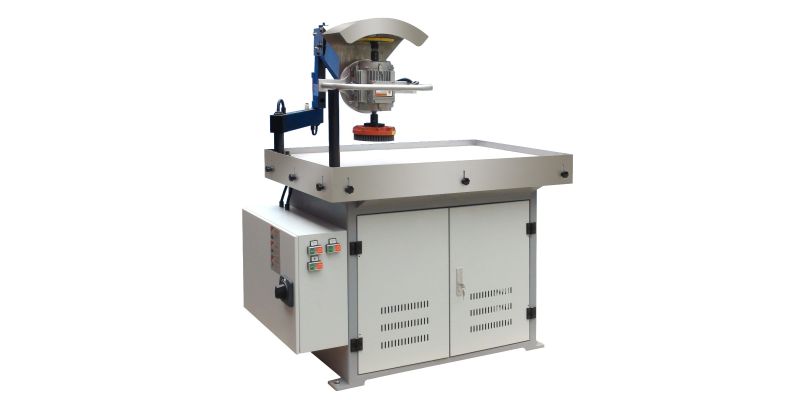
The Jonsen SD-H Deburring and Finishing Machine
The SD-H is exceptional at laser cutting, punching, and stamping. It is designed for efficient and consistent deburring and edge rounding of small batch parts, outperforming traditional handheld grinders and sanders. A 330 x 300 mm partial vacuum area securely holds parts in place with strong downward suction, while the head supports interchangeable abrasive media (with a single motor driving tools on both ends). This machine also features a "zero gravity" air-spring-supported head that hovers over the table, requiring only light pressure to engage.
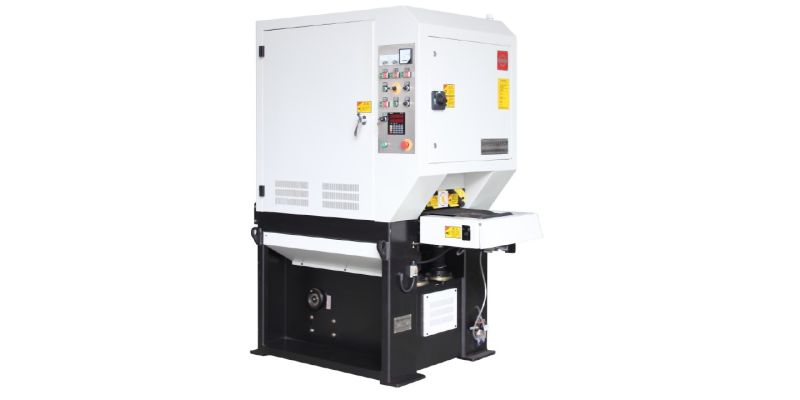
The Jonsen SD300-JS+D Deburring and Edge Rounding Machine
The Jonsen SD300-JS+D is designed for fine deburring and edge rounding of punching, stamping, fine blanking, flat-machined, and powder metal parts with light burrs and sharp edges. It is especially well-suited for high-volume production, making it ideal for placement directly after presses to minimize handling and travel time. Featuring a feed-through design for batch processing, the machine includes a wide abrasive belt head and a planetary disk brush station, which can be used together or independently. A magnetic conveyor allows efficient processing of small ferrous parts. With intuitive controls, built-in LED lighting, and a compact footprint, the machine offers user-friendly operation and efficient integration into production lines.
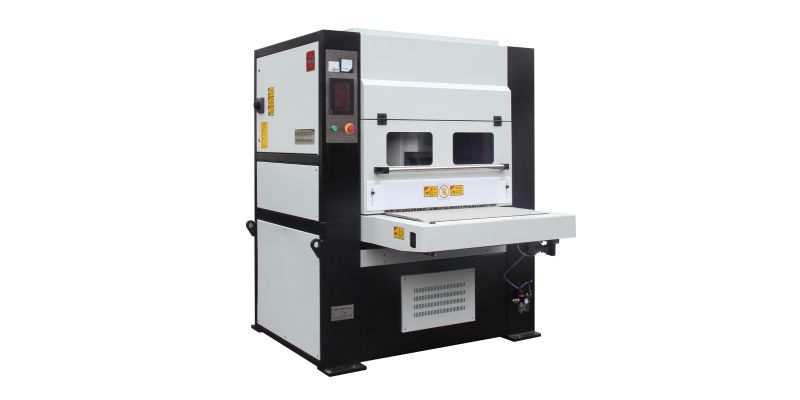
The Jonsen SGP800 Metal Deburring, Edge Rounding and Finishing Machine
The Jonsen SGP800 features a robust, welded frame that is sandblasted and powder-coated for excellent rigidity and long-term durability. Its design focuses on edge and hole treatment with minimal impact on the surface, making it suitable for film-coated boards and fine surface-machined parts, and its wide abrasive belt front station is designed for effective large burr removal, surface finishing, and precision grinding with servo-controlled lifting. High-speed rotating components use imported bearings for reliability. The Jonsen SGP800 offers long-lasting, evenly worn consumables and features a user-friendly touchscreen interface with built-in LED lighting for clear internal visibility. For dry applications, it can be paired with a Xiangsheng wet vacuum cleaner for effective dust control. This machine comes with four flexible grinding roller sets, with alternating rotation directions and a revolving assembly to ensure the abrasive strips contact all areas of the workpiece evenly.
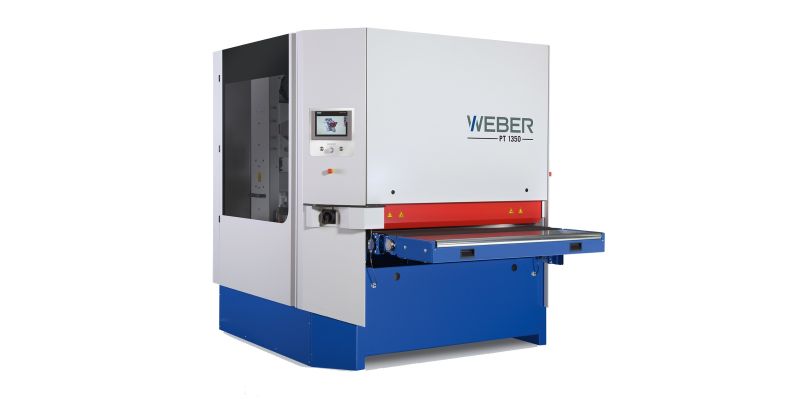
The Weber PT Series Deburring Machine
The Weber PT is a next-generation universal grinding machine designed for deburring, edge rounding, descaling, and surface grinding of both thin sheets and heavy plates. It supports up to five configurable grinding stations, with optional features like a CBF station for superior surface finishing and a bolt grinding beam tailored for flame-cut and plasma-cut plates. The machine features a modern design and an intuitive “i-Touch” control system with a fast, user-friendly Siemens TP900 Comfort interface. It offers increased grinding belt length, a laterally extendible planetary head and MRB unit for seamless production line integration, and enhanced accessibility for maintenance. Its modular construction allows for flexible adaptation to changing requirements, including optional simultaneous top and bottom processing. Ultimately, the Weber PT is a fine asset for any company looking to enhance the quality of its output.
Looking for more sheet metal machines? Need something that’s tailored to your specific operations? Well, don’t be afraid to get in touch with us directly via the Applied Machinery contact page.
